How do Sentinel data help verify deforestation-free cocoa?
Ivory CoastCocoa cultivation is an important driver of deforestation, particularly in Ivory Coast, where the sector is central to export income and rural livelihoods. The historical expansion of cocoa production into forested areas has created significant environmental and supply-chain risks. Under the EU Deforestation Regulation (EUDR), companies placing cocoa on the EU market must demonstrate that it was produced legally and did not originate from land deforested or degraded after 31 December 2020. Without credible evidence, cocoa farming communities may lose access to the EU market.
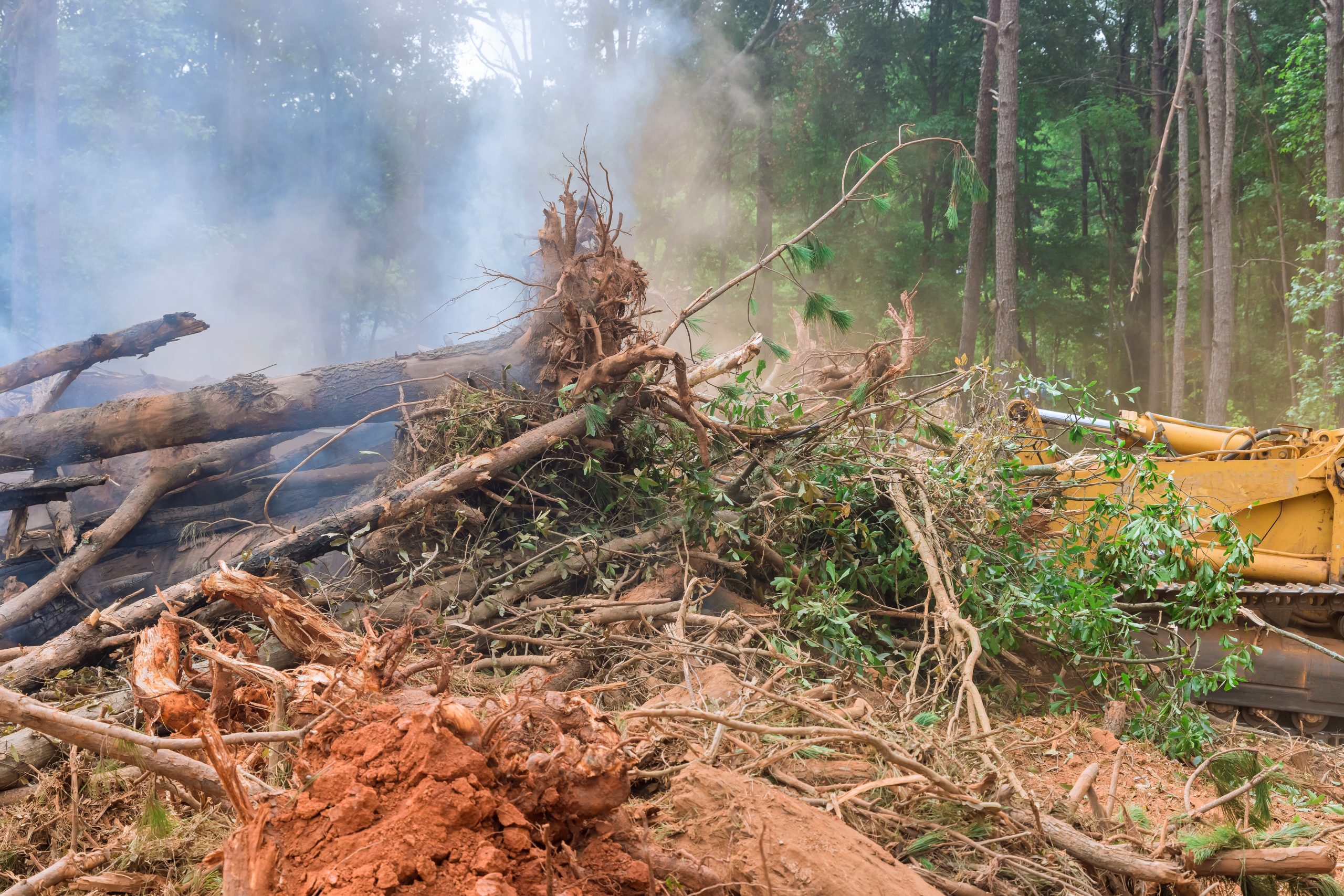
Over 80% of Ivory Coast’s forest cover lost since 1960.
The Challenge
In fragmented smallholder farming areas, thousands of individual farm polygons require verification. Field inspections alone cannot efficiently reconstruct historical land-use change across large sourcing areas, while persistent cloud cover limits the reliability of optical imagery in tropical regions.
Approximately two-thirds of the active population of Ivory Coast, including 1 million smallholder farmers, depend on cocoa for their livelihood.

The Solution
The Sentinel-1 based solution combines farm mapping, traceability information, satellite-based screening and targeted field verification within a single operational compliance workflow. Rather than relying on blanket field inspections, satellite screening flags the farms where deforestation risk may be present, and targeted field verification is then used to confirm the actual status of those flagged farms. Large numbers of cocoa farm polygons can therefore be assessed more consistently and efficiently, while supporting the preparation of audit-ready evidence for EUDR due diligence.
Sentinel-1 provides the consistent historical observations needed to determine whether land-cover change occurred before or after the EUDR cut-off date. Because radar observations are unaffected by cloud cover or daylight, Sentinel-1 is particularly valuable in tropical regions such as Ivory Coast. This combination of historical coverage and reliable observation conditions enables farm-level compliance assessment and forms the technical foundation of the operational workflow.
Description of the value chain
Tier 1
Latitude 40 Service provider
Sentinel-2 urban heat island and greening analysis and simulation.

Tier 2
Sandyford Business District Primary user
Design and planning of a new civic park under an Interreg NWE initiative.

Tier 3
Companies, organisations property ownersSecondary user
Maintenance of an attractive and economically sustainable district for business and investment.

Tier 4
Citizens & societySocietal beneficiaries
Enjoyment of living in a greener, more attractive and more sustainable district.
Other
beneficiaries
Dún Laoghaire-Rathdown County Council gains access to funding streams for activities and capital investment. They are also aided in fulfilling statutory obligations.
European Union gains evidence that Interreg NWE funding produces replicable approaches to shared transnational challenges gain a verifiable deforestation-free cocoa supply.
Key takeaways
- Farm-level compliance verification
- Targeted field verification where risk is identified
- Audit-ready evidence for EUDR due diligence
- Continued EU market access for compliant cocoa
The Benefits of using Sentinel data
Economic
Sentinel data makes EUDR compliance operationally and economically feasible across the cocoa value chain. Quantified benefits arise from Disaitek’s commercially viable service, So-B-Green’s avoided verification costs and Africao’s reduced compliance-cost exposure. The combined Sentinel-attributed economic benefit is estimated at €78k–€181k in 2025, increasing to €315k–€567k per year by 2030 as EUDR implementation expands.
€315k–€567k/year by 2030
Environmental
Sentinel-1 supports deforestation-free cocoa sourcing by making forest-cover change easier to detect and act upon. The service helps target field checks, restoration and agroforestry activities where risks are highest. So-B-Green’s programme has supported around 15,000 hectares of cocoa-agroforestry by 2026, with approximately 60,000 shade trees planted in 2025. The analysed farm areas also hold an estimated 10.53 million tonnes of above-ground biomass, showing the environmental importance of maintaining forest cover in these landscapes.
15,000 ha of cocoa-agroforestry supported by 2026
Innovation and entrepreneurship
The case demonstrates innovation in both technology and business model. Disaitek combines Sentinel-1 radar sensor data and advanced data processing methodologies to detect deforestation in tropical smallholder cocoa landscapes, including areas where only one Sentinel-1 viewing geometry is available. Around two-thirds of its R&D effort has focused on this adaptation. So-B-Green then turns the satellite output into a practical field and compliance workflow, creating a scalable service model for EUDR and potentially other commodities.
Regulatory
Sentinel data turns EUDR from a market threat into an operational compliance process. Operators placing cocoa on the EU market must prove that their products do not come from land deforested after 31 December 2020. Sentinel-1 provides the historical, cloud-independent evidence to assess farm polygons against this cut-off date, at a cost the cocoa market can sustain. Critically, it is the only freely available archive offering a consistent, cloud-independent historical record reaching back before the cut-off. This is what secures continued EU market access for compliant cocoa and the smallholders who grow it, while underpinning due-diligence statements, reducing audit uncertainty, and helping operators avoid penalties linked to annual EU turnover.
Science & Technology
The case contributes to practical knowledge on combining satellite evidence, AI and field validation for environmental compliance. A related methodological precedent, the Messok-Dja study, combined Sentinel-based land-use mapping with a 669-respondent socio-ecological field survey. The case also supports further research through doctoral work in Côte d’Ivoire and the Disaitek/So-B-Green pipeline on carbon accounting and cocoa disease detection. These contributions show how Sentinel-enabled services can stimulate applied research beyond the original compliance use case.
Societal
Sentinel-enabled verification can help compliant smallholder farmers remain connected to EU-linked cocoa markets, instead of being excluded because of broad risk assumptions or lack of evidence. The service also supports more targeted agroforestry and restoration activities, helping communities respond to land-use risks more effectively. So-B-Green works with 44+ local environmental committees across its Ivorian footprint, where satellite-derived evidence can strengthen village-level discussions on forest protection, restoration priorities.
44+ local environmental committees supported
More about the study
This case study was conducted as part of the ESA-funded SeBS360 project, led by Evenflow, which assesses the value generated through the use of Copernicus Sentinel data across the value chain. Benefits are identified and assessed through a multidimensional value framework, enabling the systematic consideration of the different benefits arising from the use of Sentinel data. The methodology combines qualitative and quantitative evidence, recognising that not all benefits can be reliably monetised. The assessment establishes a baseline and a counterfactual, representing what would likely have occurred without the use of Sentinel data. The Sentinel-enabled approach is then compared with alternative methods or previous practices to determine the added value attributable to Sentinel data.