Can Sentinel data solve Catalonia’s water shortage crisis ?
Latvia





Challenge description
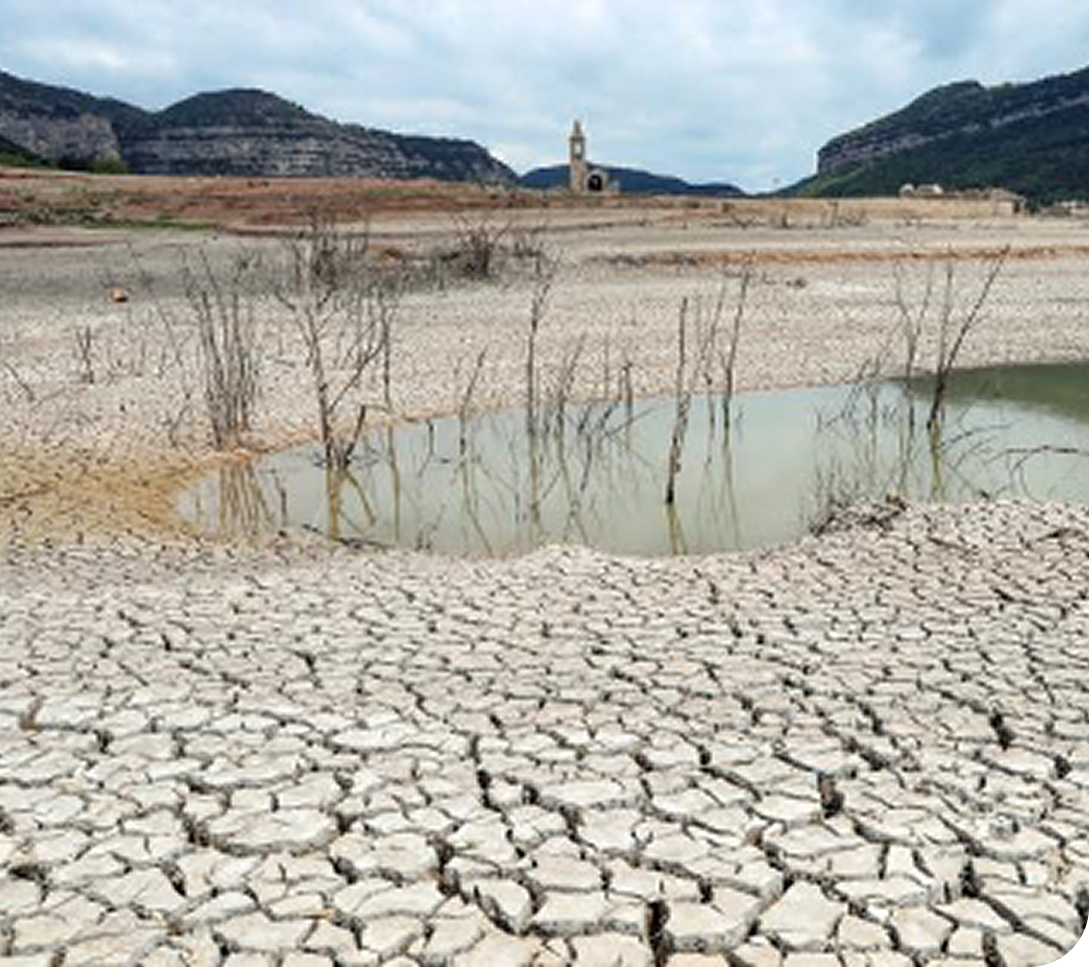
Despite the efforts conducted by Catalan authorities to manage water resources sustainably, the region regularly faces severe water shortages. The most recent crisis, one of the worst in decades, has caused significant societal and economic damages, increasing anxiety, social tensions, and economic losses, especially in agriculture.
More on the challenge
Catalonia relies heavily on groundwater while water stresses are worsened by overtourism, illegal groundwater extraction, agricultural activities and climate change. In 2024, it forced Catalan authorities to impose drastic emergency cuts on water for industries, citizens and farmers causing important damages and conflicts.
44%
of household and urban water consumption comes from Catalonia’s internal basins.
The solution
To address future water shortages, innovative solutions using Sentinel data are now being implemented by the Catalan Water Agency [MP1] (ACA) together with the Cartographic and Geological Institute of Catalonia [MP2] (ICGC). This technology can detect ground subsidence caused by aquifer exploitation, providing insights into groundwater extraction levels and aiding in sustainable, fair, and efficient water management.
To address future water shortages, innovative solutions using Sentinel data are now being implemented by the Catalan Water Agency [MP1] (ACA) together with the Cartographic and Geological Institute of Catalonia [MP2] (ICGC). This technology can detect ground subsidence caused by aquifer exploitation, providing insights into groundwater extraction levels and aiding in sustainable, fair, and efficient water management.
MORE about the sentinel Sentinel-1’s SAR technology
Concrete use case
Service provider
ICGC leveraged Copernicus Sentinel-1 data to offer satellite-based services for ground deformation monitoring in Catalonia.
Service provider
ICGC leveraged Copernicus Sentinel-1 data to offer satellite-based services for ground deformation monitoring in Catalonia.
The result
- Optimized wells concession rights
- Detection of illegal extraction
- Mitigating issues such as aquifer salinization and subsidence
The benefits
Economic
Economic benefits relate to impacts on the production of goods and services and on monetary flows, including revenue generation, cost reductions, productivity gains, capital efficiency, and employment effects associated with operational use of Sentinel-derived information.
Direct impacts are typically reflected through measurable efficiency gains, while broader downstream effects may be estimated using proxy indicators or scenario-based approaches. Where relevant, Willingness-to-Pay methods are applied to capture value associated with public goods and non-market outcomes. Economic value is often cumulative, emerging progressively as operational adoption matures and practices diffuse across organisations or markets.
Environmental
Economic benefits relate to impacts on the production of goods and services and on monetary flows, including revenue generation, cost reductions, productivity gains, capital efficiency, and employment effects associated with operational use of Sentinel-derived information.
Direct impacts are typically reflected through measurable efficiency gains, while broader downstream effects may be estimated using proxy indicators or scenario-based approaches. Where relevant, Willingness-to-Pay methods are applied to capture value associated with public goods and non-market outcomes. Economic value is often cumulative, emerging progressively as operational adoption matures and practices diffuse across organisations or markets.
Innovation
Economic benefits relate to impacts on the production of goods and services and on monetary flows, including revenue generation, cost reductions, productivity gains, capital efficiency, and employment effects associated with operational use of Sentinel-derived information.
Direct impacts are typically reflected through measurable efficiency gains, while broader downstream effects may be estimated using proxy indicators or scenario-based approaches. Where relevant, Willingness-to-Pay methods are applied to capture value associated with public goods and non-market outcomes. Economic value is often cumulative, emerging progressively as operational adoption matures and practices diffuse across organisations or markets.
Regulatory
Economic benefits relate to impacts on the production of goods and services and on monetary flows, including revenue generation, cost reductions, productivity gains, capital efficiency, and employment effects associated with operational use of Sentinel-derived information.
Direct impacts are typically reflected through measurable efficiency gains, while broader downstream effects may be estimated using proxy indicators or scenario-based approaches. Where relevant, Willingness-to-Pay methods are applied to capture value associated with public goods and non-market outcomes. Economic value is often cumulative, emerging progressively as operational adoption matures and practices diffuse across organisations or markets.
Science and technology
Economic benefits relate to impacts on the production of goods and services and on monetary flows, including revenue generation, cost reductions, productivity gains, capital efficiency, and employment effects associated with operational use of Sentinel-derived information.
Direct impacts are typically reflected through measurable efficiency gains, while broader downstream effects may be estimated using proxy indicators or scenario-based approaches. Where relevant, Willingness-to-Pay methods are applied to capture value associated with public goods and non-market outcomes. Economic value is often cumulative, emerging progressively as operational adoption matures and practices diffuse across organisations or markets.
Societal
Economic benefits relate to impacts on the production of goods and services and on monetary flows, including revenue generation, cost reductions, productivity gains, capital efficiency, and employment effects associated with operational use of Sentinel-derived information.
Direct impacts are typically reflected through measurable efficiency gains, while broader downstream effects may be estimated using proxy indicators or scenario-based approaches. Where relevant, Willingness-to-Pay methods are applied to capture value associated with public goods and non-market outcomes. Economic value is often cumulative, emerging progressively as operational adoption matures and practices diffuse across organisations or markets.
Get in touch
Lorem ipsum dolor sit amet
Lorem ipsum dolor sit amet
Lorem ipsum dolor sit amet
Lorem ipsum dolor sit amet